A stunning yard, with its fresh lawn, lovely trees, and colorful flower beds and gardens, can absolutely boost curb appeal and home value. These features help create a powerful first impression to potential buyers, making a property feel more inviting and well cared for.
But while most home buyers easily get awestruck by landscaping and outdoor spaces during showings, many overlook the actual cost of maintaining them. From lawn upkeep, irrigation repairs, to tree maintenance, the costs can add up quickly, especially for larger properties with elaborate landscaping features.
If you're a first-time home buyer, understanding the true costs of landscaping before purchasing your desired property can help you avoid financial surprises later on. Read on to find some of the most common landscaping expenses that would-be homeowners forget to factor in before purchasing their dream home.
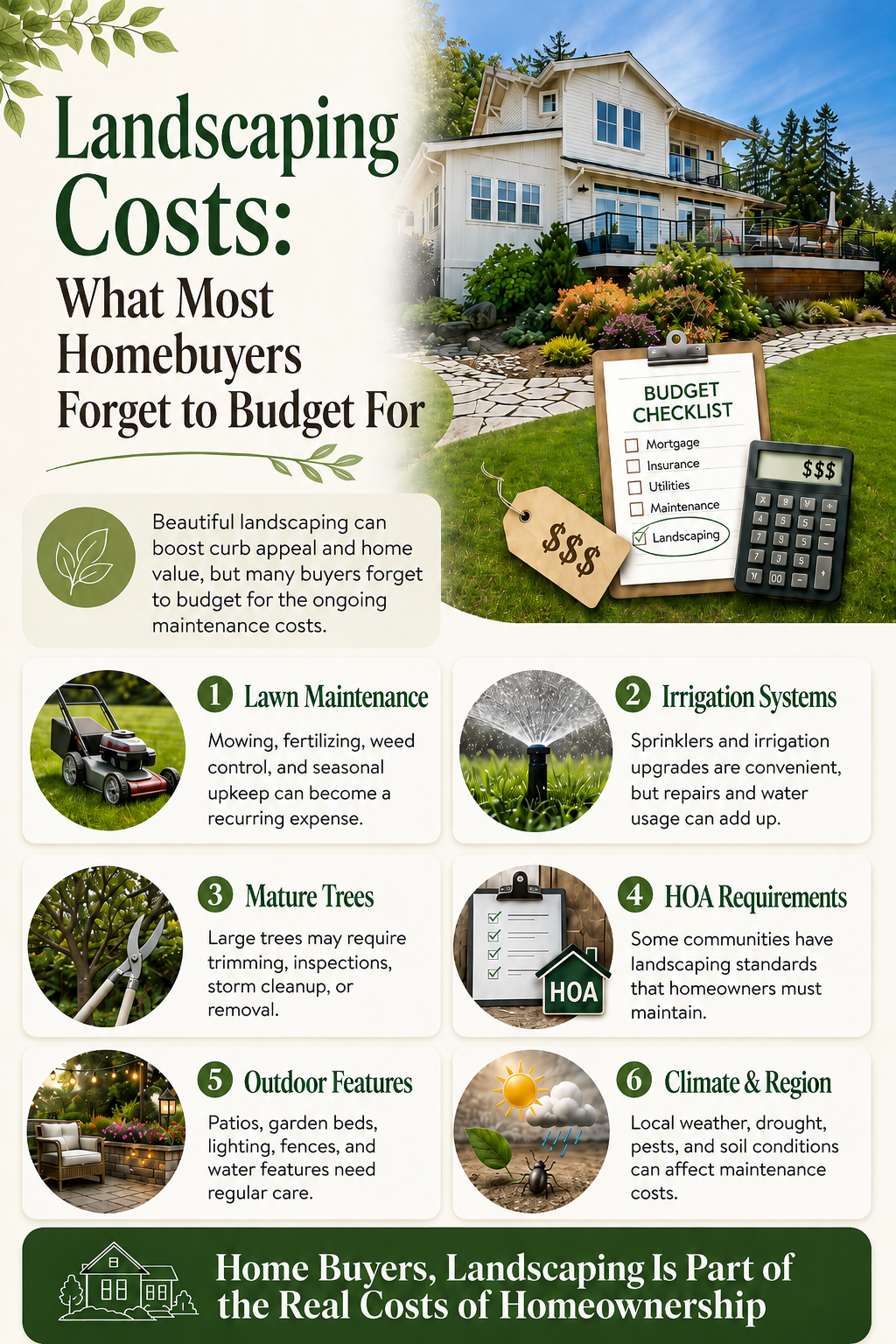
Lawn maintenance can be a never-ending expense.
A stunning, perfectly manicured lawn is a homeowner's pride. However, keeping it that way requires consistent maintenance. Depending on the size of the property, lawn care can become both time-consuming and expensive. Typical lawn maintenance includes regular mowing, fertilizing, weed control, aeration and overseeding, pest treatments, seasonal cleanup, and even sod replacement.
Homeowners who hire professional lawn care services may spend anywhere from a few hundred to several thousand dollars annually, depending on the size of the property and the region where they live. Even if you’re planning to do the work yourself, you still need to take into account the cost of equipment such as lawnmowers, trimmers, blowers, and sprinklers, among others. Lawn maintenance costs are something you shouldn’t miss during your home-buying journey.
Home irrigation systems are nice upgrades, but can also be costly.
Automatic sprinkler systems are often viewed as a bonus feature, but many buyers don't think about the occasional repairs behind them. Sprinkler heads eventually break, valves wear out, underground leaks develop, and control systems become outdated. In areas with colder climates, systems also need seasonal winterization to prevent freeze damage.
On top of repair costs, irrigation systems can significantly increase water bills during peak seasons, especially in warmer states where lawns require frequent watering. Before purchasing a home, don’t forget to ask about the age of the irrigation system, its maintenance history, past issues such as leaks or drainage problems, and the average seasonal water costs. Knowing these details beforehand can provide a much clearer picture of future landscaping expenses.
Mature trees are expensive responsibilities.
If you've been dreaming of owning a property with lovely, towering trees that provide privacy, shade, and charm, know that they also come with surprisingly high maintenance costs. Tree trimming, pruning, and disease management should only be done by professional arborists. Similarly, removal can also be quite expensive if a tree becomes damaged, diseased, or hazardous.
Tree roots can also damage sidewalks, driveways, foundations, underground plumbing, and irrigation systems, causing hidden problems over time. Before purchasing a home with mature landscaping, evaluate whether the trees have been properly maintained and ensure you’re prepared for the long-term upkeep involved.
Keep in mind the HOA landscaping requirements.
When considering a home in a neighborhood in a homeowners association (HOA), remember that they often have strict rules regarding lawn appearance, tree maintenance, fencing, seasonal upkeep, and even approved landscaping designs. Some HOAs may include landscaping services in their monthly dues, while others require homeowners to maintain the property according to community standards at their own expense. Make sure to review these things before buying to avoid potential headaches later on.
Outdoor features need some care, too.
Backyards have become major selling points in today's market. During showings, it’s easy to envision yourself enjoying the home’s outdoor living spaces, such as the patio, pool, outdoor kitchen, fire pit, and other available features. But while they may look and feel luxurious, don’t forget that they also require periodic upkeep to conserve their appearance and prevent deterioration for you to enjoy them for longer.
Climate and regional conditions also matter.
Don't forget that landscaping expenses can also vary significantly depending on the region and local climate. Homes in dry regions may require drought-resistant landscaping features, while properties in colder climates may need seasonal cleanup, snow-related repairs, or specialized irrigation winterization. Buyers in storm-prone areas also need to prepare for higher tree maintenance costs. If you’re relocating from another state or from an area with an entirely different climate, understand how local conditions can affect landscaping upkeep so you can budget more realistically before purchasing.
Home Buyers, Landscaping Is Part of the Real Costs of Homeownership
Landscaping plays a major role in a home's appearance, value, and enjoyment. When touring homes, it’s critical to look beyond the aesthetics and understand the financial commitment that comes with maintaining the landscaping and outdoor spaces. Remember to evaluate the yard with the same level of attention you give the major home systems, such as the roof, HVAC system, or foundation. Do your due diligence, ask the right questions to avoid costly surprises, and work with a trusted local real estate agent so you can be more confident in buying a home and budgeting for homeownership costs.